Era · 1800 to 1899
BDSM in the 1800s: The Century That Named the Practices
By Edwin Thale, Chronology writer Published 4 August 2026 Updated 4 August 2026
In brief
BDSM in the 1800s was not invented, it was named. Two novelists' surnames, Sade and Sacher-Masoch, were turned into diagnostic categories by the psychiatrist Richard von Krafft-Ebing in Psychopathia Sexualis in 1886, while London's flagellation press gave the same practices a commercial life and a national nickname.
Dated events in this period
- 1814The Marquis de Sade dies at Charenton, the asylum outside Paris where he had been held since 1803. His books remain suppressed in France and circulate privately for decades.
- 1870Leopold von Sacher-Masoch publishes Venus in Furs as part of his unfinished cycle The Legacy of Cain.
- 1877Henry Spencer Ashbee, writing as Pisanus Fraxi, issues Index Librorum Prohibitorum, the first systematic bibliography of English erotica, treating flagellation as a category of its own.
- 1879The Pearl begins monthly publication in London. It runs eighteen issues, with flagellation material throughout, before being shut down at the end of 1880.
- 1886Richard von Krafft-Ebing publishes Psychopathia Sexualis and files sadism and masochism as clinical terms.
- 1892Albert von Schrenck-Notzing proposes algolagnia as a rival term, and Charles Gilbert Chaddock's English translation of Krafft-Ebing carries sadism and masochism into English-language medicine.
- 1890sFlagellation titles keep moving through London's underground presses, and le vice anglais settles into a national reputation that outlasted the evidence for it.
BDSM in the 1800s invented nothing that happens in a dungeon today. Flagellation is in the record long before 1800: as monastic penance, as schoolroom punishment, as a service quietly advertised in Georgian London. What the century produced was vocabulary. Between 1800 and 1899 the practices acquired names, and those names were taken from two novelists who never met and who would both have objected.
A dead marquis and the noun he left behind
Donatien Alphonse François, Marquis de Sade, died in December 1814 at Charenton, the asylum outside Paris where he had been held since 1803. He had spent something like three decades of his life in prisons and asylums, much of it under administrative orders rather than criminal sentences. His books had been seized and his authorship of them denied by his family. The manuscript he had written on a long roll of paper in the Bastille in 1785 was lost to him when the prison was stormed; he believed it destroyed, it had in fact survived, and it was published for the first time in 1904.
What outlived him first was the adjective. The French noun sadisme was in circulation and being entered by lexicographers in the 1830s, half a century before any doctor used it as a diagnosis. That ordering matters. The word arrived through literature and public scandal, and medicine then borrowed a term the reading public had already made.
A novel, a contract, and a name its owner did not choose
Leopold von Sacher-Masoch was born in 1836 in Lemberg, then in Austrian Galicia and now Lviv. He was a working novelist with a real career: historical fiction, stories of Galician village life, a reputation across German-speaking Europe built on books that have nothing to do with the one he is now remembered for.
That one, Venus in Furs, appeared in 1870 as part of an unfinished cycle he called The Legacy of Cain. It describes a man who arranges his own subjugation to a woman, writes the terms down, and then finds that the arrangement will not stay under his control. The written contract in the novel was not invented for the page. Biographers document a signed agreement between Sacher-Masoch and Fanny Pistor in December 1869, under which he travelled to Italy in the role of her servant.
Much of what is repeated about his private life comes from a memoir published in 1906 by Aurora Rümelin, who had been his wife and who wrote as Wanda von Sacher-Masoch. It is a hostile source and an interested one, and it is also among the few sources there are. Historians read it with the caution that combination deserves, and readers of popular accounts usually do not.
1886: the year the words became diagnoses
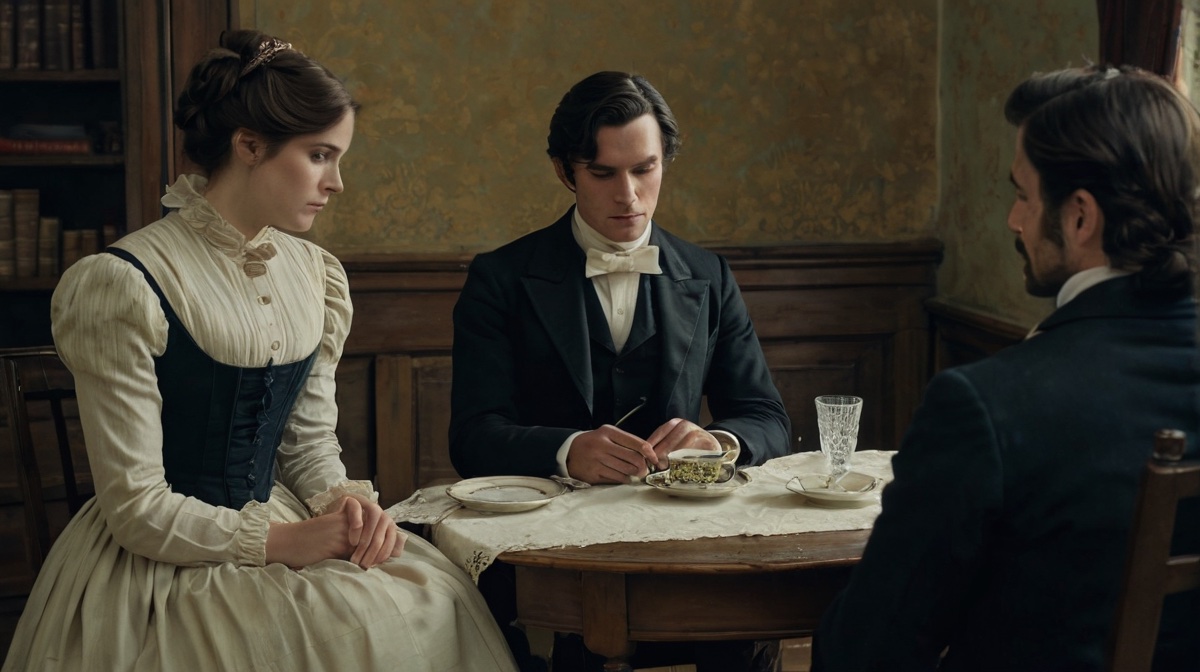
Richard von Krafft-Ebing published Psychopathia Sexualis in 1886, subtitled a clinical and forensic study. It was a working document for doctors and courts, assembled out of numbered case histories, and it introduced Masochismus as a term lifted directly from the surname of a living writer. Sadism it formalised from the French word already in use.
Krafft-Ebing was not the only person trying to name this territory. Albert von Schrenck-Notzing proposed algolagnia in 1892, from the Greek for pain and desire, on the reasonable ground that naming a medical condition after an author was poor practice. The term never took. Neither did the objection. Chaddock’s English translation, published the same year, carried sadism and masochism into English-language medicine, and from there into law, journalism and eventually ordinary speech. The longer version of that story is told in how sadism and masochism got their names, and the man himself in the entry on Krafft-Ebing.
The English vice, printed and sold

Britain produced no equivalent theorist in this period. It produced an industry instead. Flagellation had a commercial life in London open enough to acquire its own bibliography: in 1877 Henry Spencer Ashbee, publishing as Pisanus Fraxi, catalogued English erotica systematically for the first time and gave flagellation titles a category to themselves.
The trade behind the books is harder to see. Ashbee’s account of Theresa Berkley, who ran a flagellation house in Westminster and died in the 1830s, is the source for nearly everything written about her since, including the whipping frame that carries her name. One bibliographer with an appetite for a good anecdote is a thin evidentiary base. The honest position is that the details are unverified and probably unverifiable.
The printed record is firmer. The Pearl ran eighteen monthly issues in London from 1879 until it was suppressed at the end of 1880. Similar titles kept moving through the underground presses into the 1890s. By then le vice anglais, the English vice, was established across the Channel as a standing joke about English boarding schools, and the joke has comfortably outlived its evidence.
What the century actually settled
By 1899 these practices had a clinical vocabulary, a literary canon, a commercial print trade and a clear legal exposure. They had no community, no ethics anyone had written down, and no terminology of their own. Everything on that second list arrives later, and the order it arrives in is set out on the full timeline. What the nineteenth century handed forward was a set of words written by people looking in from outside, and the subculture has been arguing with them ever since.
This page is assembled from published biographies and the notes at the back of them, period magazines and newspapers, the minutes, newsletters and membership records that organisations left behind, court reports and published judgments, and academic histories of sexuality. Dates and events are taken from that documentary record rather than from what the subculture repeats about itself, and the two often disagree. Where the record is thin, where it survives only through a single interested witness, or where historians still argue about what happened, the page says so in the text instead of smoothing it over.
Questions readers ask
Did the Victorians invent BDSM?
No. The practices are far older than the nineteenth century: flagellation appears in religious discipline, in schoolrooms and in commercial sex long before 1800. What the century produced was the vocabulary, the medical framing and an organised print trade, and those three things shaped how everything after them was described.
Who actually coined the words sadism and masochism?
Richard von Krafft-Ebing fixed both as clinical categories in Psychopathia Sexualis in 1886. Masochism he built from the surname of Leopold von Sacher-Masoch, a novelist who was still alive. Sadism he adopted rather than invented: the French noun sadisme was already being recorded by lexicographers in the 1830s.
Was Sacher-Masoch asked before his name was used?
Nothing in the surviving record suggests he was consulted. He was alive and publishing when the term appeared, and he lived another nine years with it. Accounts agree he was unhappy about it, though the detail of what he said comes from later memoirs written by people with their own case to make.
The history has a present tense
Every period on this site was built by people who went looking for each other. The current one is no different, and it is happening somewhere right now.
See where it happens now