Era · 1946 to 1969
1946 to 1969: Leather, Bizarre and the First Public Spaces
By Edwin Thale, Chronology writer Published 30 July 2026 Updated 30 July 2026
In brief
The postwar decades are when this history acquires physical places. A mail-order economy in photographs and magazines grew fast and was then prosecuted, while gay motorcycle clubs and the bars around them produced the first durable spaces where people met in person. What later writers called Old Guard leather culture formed in those rooms, though the label itself was invented long afterwards.
Dated events in this period
- 1946John Willie publishes the first issues of Bizarre in New York. The magazine runs intermittently for twenty-six issues and ends in 1959.
- 1947A motorcycle rally at Hollister, California, produces the news coverage and the widely reproduced photograph that fix the outlaw-biker image in American culture. The photograph has long been described as staged.
- 1954The Satyrs Motorcycle Club is founded in Los Angeles, generally recorded as the first gay motorcycle club in the United States and still operating decades later.
- 1955The Senate subcommittee investigating juvenile delinquency, chaired by Estes Kefauver, holds hearings on pornography. Irving Klaw is called and declines to answer, invoking the Fifth Amendment.
- 1958Chuck Renslow opens the Gold Coast in Chicago, usually described as the first leather bar in the United States.
- 1964Life magazine publishes Homosexuality in America, opening with a photograph taken inside the Tool Box, a San Francisco leather bar. It is the first time most Americans see the culture at all.
Before 1946 this subject had readers, customers and correspondents. It did not have rooms. The two decades after the war are when rooms appear, and the change is more consequential than anything happening in the medical literature at the same time. People who meet in person form groups. Groups develop customs, arguments, hierarchies and eventually records.
The mail-order economy
The commercial side came first, and it inherited its methods from the interwar trade. John Willie, an English artist who had worked in Australia before moving to North America, started Bizarre in 1946. The run was uneven, with long gaps, and it finished in 1959 under other management, but across those issues Willie assembled something that had not existed before: a house style. Elaborate rope work, high heels, corsetry, a knowing humour, and a serialised comic strip about a perpetually captured heroine. Later fetish illustration is largely descended from it.
Irving Klaw ran the volume business. From a shop on East 14th Street he and his sister Paula sold film stills by mail, then photographs and short films of their own, and by the mid-1950s he was the largest supplier of bondage imagery in the United States. Most of it was posed and clothed, partly by taste and largely by legal calculation. He commissioned drawings from Eric Stanton and Gene Bilbrew and published Willie’s strips, which is how a small group of artists came to define the visual language of the whole field.
All of this moved through the post, and the post was policed. Federal obscenity law gave prosecutors a straightforward mechanism against anyone mailing this material, and the mechanism was used.
1955, and what a hearing can do
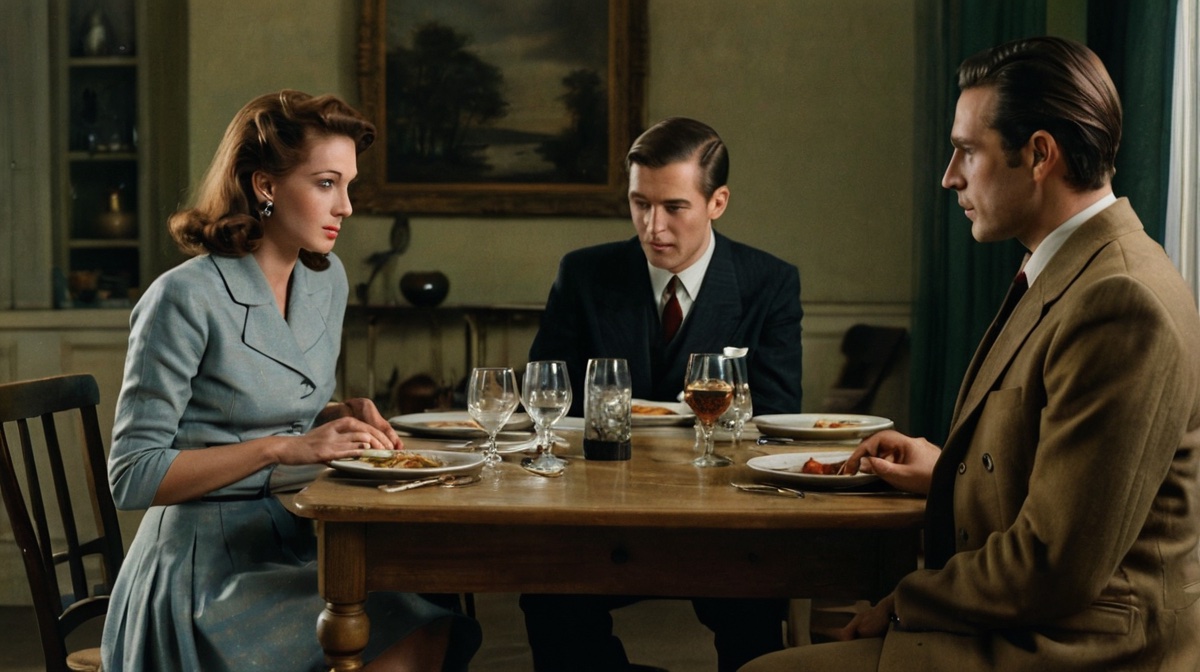
The Senate subcommittee on juvenile delinquency turned to pornography in 1955 under Estes Kefauver, whose earlier organised crime hearings had made him a national figure. Klaw was called. He invoked the Fifth Amendment rather than answer, which was legally sound and publicly ruinous.
The hearings did not by themselves close him down; the prosecutions that followed over the next several years did that. His business ended in the early 1960s and a large quantity of his negatives was destroyed, some by court order and some pre-emptively. His sister saved what she could. The episode is a useful corrective to any account that treats the 1950s as a period of quiet accumulation. The trade was built and dismantled inside a decade.
Bikes, bars and a visible culture
The other track ran through motorcycles. Postwar clubs, military surplus, and the outlaw image manufactured after the Hollister rally in 1947 and rehearsed by Marlon Brando in 1953 gave a generation of men a costume that read as masculine and slightly dangerous and could be worn in public without explanation. Gay men took it up deliberately, in part because the prevailing image of homosexuality at the time was the opposite of it.
The Satyrs formed in Los Angeles in 1954. Other clubs followed across the west coast and midwest, with runs, colours, patches and a structure borrowed wholesale from straight biker clubs. Bars came next: Chuck Renslow opened the Gold Coast in Chicago in 1958, the Tool Box opened in San Francisco in 1962 with Chuck Arnett’s mural of leathermen across one wall, and by the early 1960s a man could arrive in a strange city and find the scene by asking the right question in the right place. The signalling conventions that made those questions unnecessary, described in the history of the hanky code, come slightly later.
Then Life magazine arrived. Its June 1964 feature on homosexuality in America opened inside the Tool Box, under Arnett’s mural. The article was not friendly. It was, for an enormous number of readers, the first evidence that any of this existed, and several later accounts describe men moving to San Francisco because of it.
What was not happening
Two absences are as important as the presences.
There were no formal organisations. Clubs had officers and rules, but nothing existed to speak for the culture, hold records, run education or defend anyone in court. That arrives in the 1970s.
And the visible scene was overwhelmingly gay and male. Heterosexual and lesbian networks existed, and correspondence from the period shows them operating, but they had fewer venues, less commercial infrastructure and almost no press, so they left far thinner records. Any history of this period that treats gay leather culture as the whole story is doing so because that is where the documents are, which is a reason for caution rather than a finding.
Finally, the term. Old Guard, applied to the men of these decades, was coined much later, and the elaborate protocols attributed to them under that name were codified in the 1980s and 1990s, frequently by people who had not been there. The bars were real. The rulebook is a memory of a rulebook. The full timeline keeps the two apart.
This page is assembled from published biographies and the notes at the back of them, period magazines and newspapers, the minutes, newsletters and membership records that organisations left behind, court reports and published judgments, and academic histories of sexuality. Dates and events are taken from that documentary record rather than from what the subculture repeats about itself, and the two often disagree. Where the record is thin, where it survives only through a single interested witness, or where historians still argue about what happened, the page says so in the text instead of smoothing it over.
Questions readers ask
Where did leather culture come from?
From postwar American motorcycle clubs, and specifically from the gay motorcycle clubs that began forming in the mid-1950s. Returning servicemen, surplus military clothing, bikes and a bar culture that had to stay semi-private combined into something recognisable by the end of the decade. The commercial fetish trade of the same years developed separately, by mail, and only merged with the bar scene later.
Was the Old Guard real?
The people and the bars were real. The codified system of rules attributed to them is a retrospective construction. The phrase Old Guard came into use decades after the period it describes, and the detailed protocols circulated under that name from the 1980s and 1990s do not match what the surviving documentary record from the 1950s and 1960s shows. Treat any confident list of Old Guard rules as folklore about the past rather than evidence from it.
What was Bizarre magazine?
An illustrated fetish magazine published in New York by the artist John Willie from 1946, running to twenty-six issues before it ended in 1959. It carried drawings, photographs, correspondence and Willie's comic strip Sweet Gwendoline. It was the first publication in English to treat this material as a subject with its own aesthetic rather than as smut with a cover price.
The history has a present tense
Every period on this site was built by people who went looking for each other. The current one is no different, and it is happening somewhere right now.
See where it happens now