Era · to 1800
Before 1800: Flagellation, Courtly Submission and the Libertines
By Edwin Thale, Chronology writer Published 1 September 2026 Updated 1 September 2026
In brief
Every physical element of what is now called BDSM appears somewhere before 1800: whipping as penance and as pleasure, arrangements of service and submission, and a literature of extremity. None of it amounted to a subculture. The people involved had no shared vocabulary, no ethics they had agreed among themselves, and in most cases no way of knowing that anyone else was doing the same thing.
Dated events in this period
- 1349Pope Clement VI condemns the flagellant processions that had spread across Europe during the plague years, ending the movement's public phase.
- 1629Johann Heinrich Meibom's Latin treatise on the use of rods in venereal matters is printed, fixing the medical argument that flogging stimulates desire. It stays in circulation for two centuries.
- 1748John Cleland's Memoirs of a Woman of Pleasure begins publication in London. Its extended flogging episode treats the practice as a subject the reader already recognises.
- 1750sHarris's List of Covent Garden Ladies begins its annual run, listing women who offered birching among their services and giving the London flagellation trade a paper record.
- 1782The first part of Rousseau's Confessions is published after his death, containing the period's only sustained first-person account of a childhood beating and its adult consequences.
- 1785Sade writes The 120 Days of Sodom in the Bastille on a hidden roll of paper. He believes the manuscript destroyed when the prison falls four years later; it survives and is first published in 1904.
- 1791Justine is published anonymously in Paris. Sade's authorship is an open secret and is denied by his family for the rest of the century.
The word BDSM is roughly two centuries away at the start of this period, and so is everything the word implies: a community, an ethic, a set of terms people apply to themselves. What exists before 1800 is a scatter of practices, texts and reputations that later writers assembled into an ancestry. Some of that assembly is honest. A good deal of it is not.
Penance, and its secular drift
Ritual whipping has a long documented life inside Christianity. Self-flagellation was pressed as private penance by eleventh-century reformers, Peter Damian among the most insistent, and it settled into monastic discipline. In the thirteenth and fourteenth centuries it went public: processions of flagellants moved through Italian and then northern European towns, most dramatically during the plague years of 1348 and 1349, until Clement VI condemned the movement in October 1349. The stated purpose throughout was penitential. Treating it as erotic requires evidence the record does not supply, and the honest answer about what individual penitents felt is that nobody knows.
The link between the religious and the secular runs instead through medicine. Early modern physicians took seriously the idea that striking the lower back and buttocks warmed the blood and stirred desire, and the standard reference for that view was a short Latin treatise by the German physician Johann Heinrich Meibom on the use of rods in venereal matters, printed in 1629. It was reprinted and translated for the next two hundred years. A doctor recommending flogging as a remedy for impotence is not describing a subculture. He is describing a practice common enough to require a treatise, which is a different kind of evidence and a firmer one.
The English vice, before it had a name
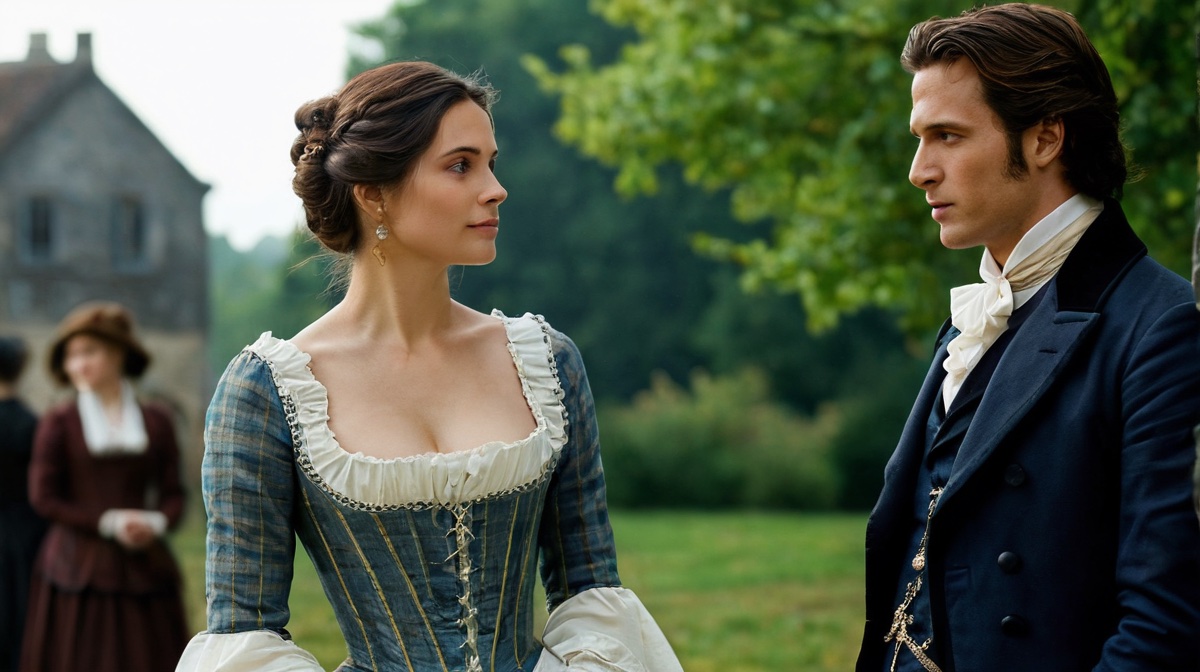
By the eighteenth century London had a commercial flagellation trade. The evidence for it is uneven but real. Harris’s List of Covent Garden Ladies, the annual directory of prostitutes that began appearing in the late 1750s, records women who offered birching among their services, and it was written for customers rather than for posterity, which is what makes it useful. The famous named flagellation houses of Georgian London are much shakier ground. Almost everything repeated about them descends from Victorian bibliographers writing a century after the fact and enjoying themselves considerably.
The reputation travelled faster than the evidence. Le vice anglais was established across the Channel as a joke about English schoolrooms well before anyone attempted to show that the English did it more than their neighbours. Nobody ever has. The claim survives because it is a good story about a rival nation, and because the birch really was standard in English schools, which gave the joke somewhere to point.
Three texts that carry the period
John Cleland’s Memoirs of a Woman of Pleasure, published in two volumes in 1748 and 1749 and known since as Fanny Hill, contains an extended flogging episode between the narrator and a client. Cleland was arrested and the book suppressed, which did nothing to stop it circulating; it stayed in print underground for two centuries. The scene matters less for what it depicts than for how it is written. Cleland assumes his readers already know what this is. In 1748, a paying English audience recognised flagellation as a distinct erotic subject requiring no introduction.
Rousseau’s Confessions, published after his death in 1782 and 1789, supplies the period’s most useful single document: a first-person account of being beaten as a child by his guardian’s sister, and of discovering that the punishment had produced something other than shame. Rousseau states the fact, connects it to his adult desires, and cannot explain it. Nothing else from this era comes close. It is the only testimony in which someone describes their own formation and attempts to account for it.
Then Sade. Donatien Alphonse François de Sade wrote The 120 Days of Sodom in the Bastille in 1785 and published Justine anonymously in 1791. His fiction is not about negotiated exchange and never claims to be. Its subject is violence without limit, applied to victims who do not consent and largely do not survive, in the service of an argument about nature and law. His own criminal record involved real people who made real complaints against him. His entry here sets out what he was actually imprisoned for, which is not what most short accounts report.
What the period hands forward
The inheritance is this. A body of religious and medical writing that treated whipping as meaningful. A trade in London with a documented paper record and a largely undocumented oral one. A literary tradition running from the courtly love poets, whose lovers address their ladies in the language of feudal service, through to the libertine novel, which made dominance and submission available as literary subjects. And one imprisoned writer whose surname would be turned into a diagnosis by a psychiatrist working seventy years after his death.
What the period does not hand forward is any of the things that constitute a subculture: shared vocabulary, agreed limits, mutual recognition, an argument about ethics conducted between participants. All of that arrives later, and the order it arrives in is set out on the timeline. The nineteenth century supplies the words. The twentieth supplies the people who use them about themselves.
The temptation with a period this thin is to fill it in. Resisting that is most of the work.
This page is assembled from published biographies and the notes at the back of them, period magazines and newspapers, the minutes, newsletters and membership records that organisations left behind, court reports and published judgments, and academic histories of sexuality. Dates and events are taken from that documentary record rather than from what the subculture repeats about itself, and the two often disagree. Where the record is thin, where it survives only through a single interested witness, or where historians still argue about what happened, the page says so in the text instead of smoothing it over.
Questions readers ask
Did BDSM exist before 1800?
The practices did. The subculture did not. Flogging, restraint, ritual submission and contracts of service are all documented long before 1800, in religious discipline, in commercial sex and in fiction. What is missing is everything that makes a subculture: a shared name, agreed limits, mutual recognition between participants, and any body of writing in which practitioners describe themselves rather than being described by outsiders.
Why is it called the English vice?
Le vice anglais was a French joke about English flagellation, and specifically about English schools, where the birch was standard discipline. It circulated widely from the eighteenth century onward. No one has ever demonstrated that flagellation was more common in England than elsewhere, and the phrase survives on the strength of the joke rather than the evidence.
Was religious flagellation erotic?
The surviving sources describe it as penance, and reading them as erotic requires evidence they do not supply. The honest position is that we cannot know what individual penitents experienced. What can be said is that early modern medicine took seriously the idea that flogging stimulated desire, which suggests the connection was being made by observers at the time, in a medical register rather than a devotional one.
The history has a present tense
Every period on this site was built by people who went looking for each other. The current one is no different, and it is happening somewhere right now.
See where it happens now